
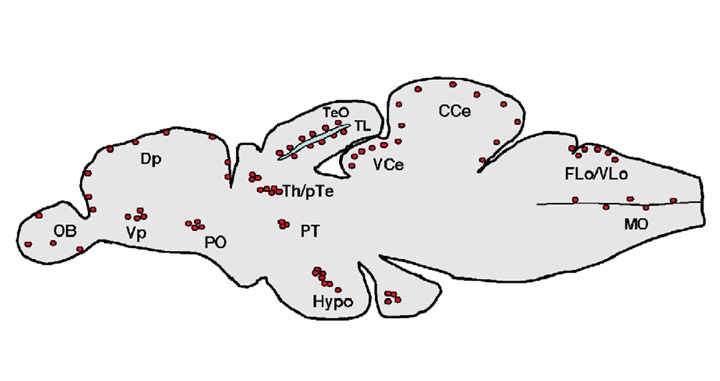
[vc_row][vc_column][ultimate_spacer height=”35″ height_on_tabs=”25″ height_on_tabs_portrait=”25″ height_on_mob_landscape=”25″ height_on_mob=”25″][vc_custom_heading text=”PROGRESS IN NEUROBIOLOGY” font_container=”tag:p|text_align:left|line_height:1.3em” google_fonts=”font_family:Muli%3A300%2C300italic%2Cregular%2Citalic|font_style:400%20regular%3A400%3Anormal” css_animation=”slideInLeft”][ultimate_spacer height=”10″ height_on_tabs=”10″ height_on_tabs_portrait=”10″ height_on_mob_landscape=”10″ height_on_mob=”10″][vc_custom_heading text=”A comparative framework for understanding the biological principles of adult neurogenesis” font_container=”tag:h3|text_align:left|line_height:1.3em” google_fonts=”font_family:Muli%3A300%2C300italic%2Cregular%2Citalic|font_style:400%20regular%3A400%3Anormal” css_animation=”slideInLeft”][ultimate_spacer height=”10″ height_on_tabs=”10″ height_on_tabs_portrait=”10″ height_on_mob_landscape=”10″ height_on_mob=”10″][vc_column_text]Benjamin W Lindsey and Vincent Tropepe [/vc_column_text][ultimate_spacer height=”25″ height_on_tabs=”25″ height_on_tabs_portrait=”25″ height_on_mob_landscape=”25″ height_on_mob=”25″][vc_column_text]Adult neurogenesis appears to be a somewhat extreme and uneconomical form of structural remodeling, compared to the relatively subtle modifications in synaptic morphology that is known to mediate functional plasticity of neural circuitry. Nonetheless, it is precisely this attribute of adult neurogenesis that is beginning to redefine contemporary notions of neural plasticity. Thus, it is no surprise that the field of adult neurogenesis has in the last few decades become one of the most research-intensive fields in the neurosciences. However, despite the impressive progress made on delineating the molecular and cellular properties underlying the process of adult neurogenesis in a few laboratory models, we know very little about the anatomical organization, species diversity, functional significance and evolutionary history of this trait. The importance of understanding the basic cell biology of adult neurogenesis is paramount, but without considering how the natural environment regulates neurogenesis and how this trait has evolved, our understanding remains incomplete. Our current knowledge of adult neurogenesis rests on studies of no more than a few dozen species worldwide, and only a small subset of these species has undergone detailed anatomical mapping for the presence of this trait (Fig. 1). Considering that the animal kingdom consists of approximately 1.5 million known species, this represents a very tiny sampling of the potential diversity of adult neurogenesis.[/vc_column_text][ultimate_spacer height=”25″ height_on_tabs=”25″ height_on_tabs_portrait=”25″ height_on_mob_landscape=”25″ height_on_mob=”25″][vc_column_text]READ FULL PUBLICATION
Lindsey and Tropepe, 2006 (1.5 MB)
[/vc_column_text][ultimate_spacer height=”25″ height_on_tabs=”25″ height_on_tabs_portrait=”25″ height_on_mob_landscape=”25″ height_on_mob=”25″][vc_btn title=”back to publications” color=”orange” i_icon_fontawesome=”fa fa-bookmark-o” add_icon=”true” link=”url:http%3A%2F%2Flindseylab.ca%2Fpublications%2F|title:PUBLICATIONS%202||”][ultimate_spacer height=”25″ height_on_tabs=”25″ height_on_tabs_portrait=”25″ height_on_mob_landscape=”25″ height_on_mob=”25″][/vc_column][/vc_row]